Welcome to Year 12 History.
This year we will be focusing on the rise of communism and capitalism in both the east and west.
We will be focusing in particular on the Russian Revolution and Vietnam.
This page will contain information on what we will be covering in class, the notes covered and and additional information which will be of benefit to your studies.
There will also be tips to help you with your internal and external assessments.
Any questions, please let me know.
I hope you enjoy the course this year.
Course Introduction
Focus for this year…
East v. West – Communism v. Capitalism in the 20th Century with special studies of the Russian Revolution and the Conflict in Indochina.
Below is a table outlining the main internal and external assessments you will be attempting.
| AS 91229 2.1 | I | Carry out an inquiry of an historical event, or place, of significance to New Zealanders. (4 credits). |
| AS 91230
2.2 |
I | Examine an historical event, or place, of significance to New Zealanders. (5 credits). |
| AS 91231
2.3 |
E | Examine sources of an historical event of significance to New Zealanders. (5 credits). |
| AS 91233
2.5 |
E | Examine the causes and consequences of an event of significance to New Zealanders. (5 credits) |
Key Historical Concepts
History aims to develop your understanding of the following key concepts:
| Significance
To develop your ability to weigh evidence (usefulness and reliability of evidence/sources) To develop your ability to debate what is historically significant and why |
Continuity and Change
To develop your ability to order events To develop your ability to understand reasons for continuity and reasons for change |
| Cause and Effect
To debate and evaluate the causes of past events To understand how events affect people’s lives and communities To study the relationship between cause and events |
Perspectives, Values and Viewpoints
To understand there are multiple viewpoints on the past To begin to develop an understanding that the past is contested
|
Development of the Key Competencies:
Thinking: ccnsidering the ideas of social change and international relations, their causes and impacts, understanding different perspectives on events, forming an idea of historical sequence, information gathering and processing
Using Language, Symbols and Text: selecting various resources, resource interpretation and evaluation , Communication of historical ideas, essays, information presentation in different modes
Managing Self: iindependent assignment work, meeting deadlines, forming own opinions on historical events
Relating to Others: understanding different historical perspectives, co-operative learning activities: class debates and simulation games
Participating and Communicating: collecting resources for research from a wide range of sources, forming and sharing of opinions
Expectations
- It is imperative that you keep up to date with your course work and do not allow yourself to fall behind. You are advised to regularly revise and review your notes and complete set tasks, which will be based on the external standards.
- You will be expected to contribute and to discuss your ideas in this course.
- You are expected to use your research time wisely and to keep detailed records of resources used. Correct bibliographies and footnoting are required where appropriate.
- You will have regular interviews with your teacher during your research time to ensure that you are on the right track
- Failure hand in an assignment on the due date will result in a Not Achieved grade.
- You are expected to familiarise yourself with school internal assessment policy and follow guidelines, if required, regarding extensions and queries of grades.
- The Social Sciences department will retain your work until such time as it is no longer required for moderation purposes.
- You are warmly invited to submit practice essays or other tasks at any time in the expectation that this will improve your skills and provide valuable feedback!
clash-of-the-forces-y12-intro-powerpoint
Term One
The Rise of Communist Russia
Before we look at how the Tsar Regime fell in Imperial Russia and Lenin came to power, we first have to get our heads around some theory.
Communism is a work you will hear A LOT in our course so lets look at that first…
Communism is a theoretical economic system of rule by the collective ownership of property and by the organisation of labour for the common advantage of all members.
A system of government in which the state plans and controls the economy and a single, often authoritarian party holds power, claiming to make progress towards a higher social order in which all goods are equally shared by the people.
The Marxist – Leninist version of Communist doctrine that advocated the overthrow of capitalism by the revolution of the proletariat.
In other words…
- One class of equal workers
- Society should have no wealth, greed, poverty or persecution
- The upper/ rich class of capitalists has to be removed as they oppose communism
The Theory behind Communism came from Karl Marx. With Fredrick Engles, Marx wrote the Communist Manifesto which outlined his main thinking about what Communism is and what society should be.
Imperial Russia
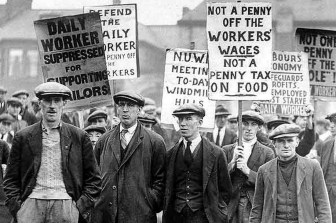
At the end of the 19th century big changes were sweeping across Mother Russia. The Industrial Revolution had finally arrived. Only, 100 years after it had begun in other European countries, but who’s counting? Thousands of poor peasants flocked to the cities in search of factory work. And, as in other industrializing countries, a new middle class of educated professionals began to emerge who saw Russia as a backward country hopelessly stuck in the middle ages. They wanted change, they wanted equal rights and they wanted to escape the pains of the Tsarist rule which had them trapped in this pit of despair.
These liberal thinkers, freshly educated from the top universities in Europe, were inspired by life in France, Germany, and Great Britain. When they returned home they formed secret political clubs, to discuss illegal topics such as democracy, socialism, labor unions, and freedom of the press, all the time aware that the Tsar’s dreaded secret police–The Okharna– could burst in at any moment and exile them to Siberia for treason. In spite of this threat, or perhaps because of it, revolution was in the air at the turn of the 20th century.
2-imperial-russia authority-in-russia-under-nicholas-ii
changes-in-russia imperial-russia-1900
Causes of The Russian Revolution
The Russian Revolution of 1917 involved the collapse of an empire under Tsar Nicholas II and the rise of Marxian socialism under Lenin and his Bolsheviks. It sparked the beginning of a new era in Russia that had effects on countries around the world.
causes-of-the-1917-revolution causes-of-the-1917-russian-revolution
The Reign of Tsar Nicholas II
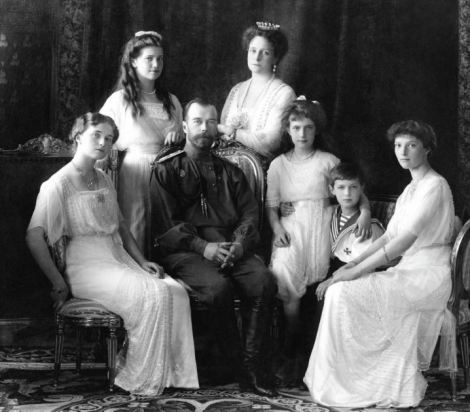
The strengths of the Tsar’s government were those usually found in an autocratic regime – Church, army, a repressive secret police and the unthinking love of the peasantry.
The weaknesses of the government lay in its incompetence, in the huge size and economic poverty of Russia, and in the pressures coming from a modernising world – i.e., from a middle class which had already in 1905 forced the Tsar to set up a parliament (the Duma), and from extreme political groups which wanted even more radical changes.
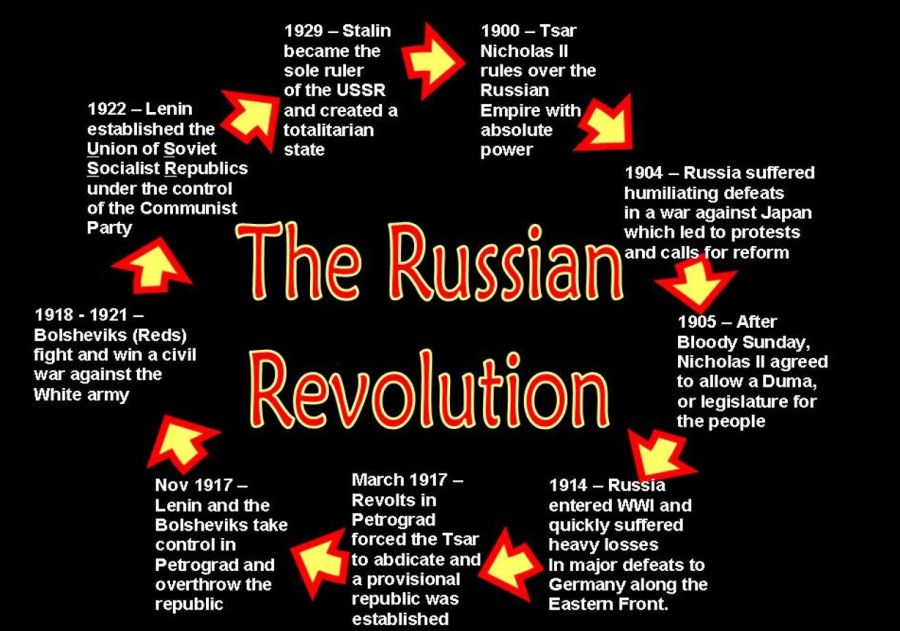
A Summary of Events 1914–1941
1914–17 Russia is ruined by entering World War I.
March 1917 February Revolution; Nicholas abdicates.
Mar–Nov 1917 Provisional Government (Kerensky)
November 1917 October Revolution (Bolsheviks)
1917–1924 Lenin in power
Civil War and War Communism
Kronstadt mutiny and the New Economic Policy
1924–1941 Stalin comes to power
Five Year Plans, Collectivisation and Purges.
Strengths
- The Peasantsloved the Tsar as ‘their father’, and revered him as empowered from God – though this was shattered in St Petersburg in 1905, when the Cossacks attacked a peaceful demonstration (Bloody Sunday).
- The Romanov dynasty had ruled since 1613 – the 300thcelebrations saw a wave of popularity for the Tsar. In 1905, there had been a revolution and Nicholas was forced to accept a Duma (parliament), but it had no power and the Tsar dismissed it if it disagreed with him.
- The church was powerful and supported the Romanov government.
- Government and the army were controlled by the nobles and supported the government, which used the Cossacks to put down protests (eg Bloody Sunday 1905)
- The secret police (Okhrana) and press censorship.
- There were two parties in the Duma which supported the Tsar:
- the ‘Rights‘ (called by Lenin ‘the Black Hundreds’) – deputies who so supported the Tsar that they wanted to abolish the Duma and restore autocracy.
- the ‘Octobrists‘ – during the troubles of 1905, the Tsar and his chief minister Witte had published the October Manifesto, which promised freedom of speech, no imprisonment without trial, and a Duma to approve all laws. The Octobrists were supporters of the Tsar who did not want to go so far as to restore autocracy, but wanted him to keep to the October manifesto.
Weaknesses
- Russia had been humiliated in a war with Japan, 1904 (why?).
- There were many nationalities, languages and religions (the only unity was the Romanov dynasty).
- Russia was vast – 125 million people spread across Europe and Asia. This made government difficult, especially because of poor communications – bad roads and few railways.
- An out-of-date farming economy. Most of the population were peasants who lived in the country and are under the control of the nobles.
- Russia was beginning to industrialise (eg Trans-Siberian railway, 1904). Towns/ factories were starting to grow up. But there was worker poverty and poor living conditions – which created a large workforce, disaffected and concentrated in Petrograd, the capital. Also a small wealthier middle class were beginning to want a say in the government.
- Tsar Nicholas was an autocrat – Nicholas carried out all the business of government alone, without even a secretary, an impossible load He was a weak Tsar. At first he refused to compromise then, in the crisis of 1917, failed to act.
- There was opposition to the government from:
The Kadets – middle classes and liberal landowners who wanted Russia to have a Parliament like England.
Social Revolutionaries(wanted a peasant revolution, and to take all the land from the nobles).
The Communists (followers of Karl Marx), who were divided into the moderate Mensheviks (wanted Communism without a revolution) and the extremist Bolsheviks (wanted a violent proletarian revolution).After 1900, there were many assassinations and protests (eg Bloody Sunday, 1905 and the murder of Prime Minister Stolypin in 1911).
1905 Revolution
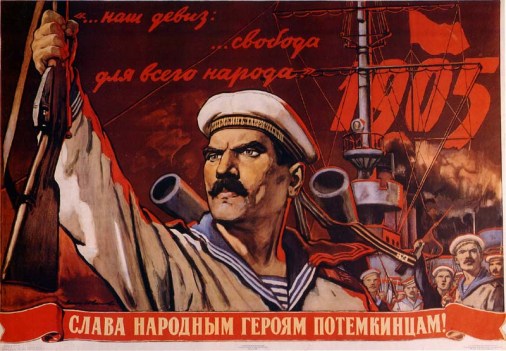
War against Japan
- Dates: 1904-1905
- Reasons for war:
- Fighting for control of Manchuria & Korea
- Hope that a quick victory would improve popularity of Tsar & his govt.
- A series of disastrous defeats, made worse by extreme distance & lack of infrastructure.
- Effects:
- Weakened Tsar’s position
- Worse conditions for working people – factories closed and people starved
Bloody Sunday
- Date: Sunday 22 January 1905
- Those involved: Father Gapon (former Okhrana agent) & 200,000 workers
- Petition asked for:
- Shorter working day, trade unions
- improved working conditions, free medical aid, higher wages for women and children
- elections for Constituent Assembly (democratic parliament) by universal, equal, secret suffrage
- freedom of speech, religion, press and assembly
- end to war with Japan
- Notice given to march to see the Tsar and Minister of Interior Mirsky. No reply. Tsar with his family at Tsarkoe Selo
- Road barred by infantry & cavalry, knouts, sabres, guns. Around 500 marchers killed, thousands wounded.
- Describe the Tsar’s reaction:
- Effects: Bloody Sunday had started a revolution against the Tsar
1905 Revolution
- In June there was a mutiny on the battle ship Potemkin.
- There were peasant riots and many non-Russian peoples of the Empire declared independence.
- A general strike began in October 1905. Councils of workers called Soviets were set up to run the strike.
- In October the Tsar issued the October Manifesto, promising a Duma.
- In December the Tsar crushed the revolution with the help of the army and bands of thugs called Black Hundreds.
- When the first Duma met in 1906 Nicholas issued Fundamental Laws, showing that he intended to continue ruling as an Autocrat.
FATHER GEORGE GAPON
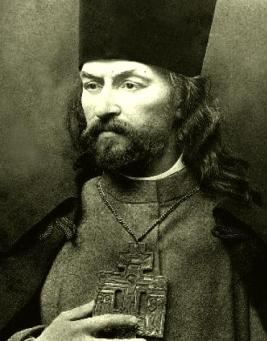 George Gapon, the son of a priest, was born in Russia in 1870. He became a priest in St. Petersburg where he showed considerable concern for the welfare of the poor.
At the beginning of the 20th century the Russian industrial employee worked on average an 11 hour day (10 hours on Saturday). Conditions in the factories were extremely harsh and little concern was shown for the workers’ health and safety. Attempts by workers to form trade unions were resisted by the factory owners and in 1903 Gapon formed the Assembly of Russian Workers. Within a year it had over 9,000 members.
1904 was a bad year for Russian workers. Prices of essential goods rose so quickly that real wages declined by 20 per cent. When four members of the Assembly of Russian Workers were dismissed at the Putilov Iron Works, Gapon called for industrial action. Over the next few days over 110,000 workers in St. Petersburg went out on strike.
In an attempt to settle the dispute, Gapon decided to make a personal appeal to Nicholas II. He drew up a petition outlining the workers’ sufferings and demands. This included calling for a reduction in the working day to eight hours, an increase in wages and an improvement in working conditions. Gapon also called for the establishment of Universal suffrage and an end to the Russo-Japanese War.
Over 150,000 people signed the petition and on 22nd January, 1905, Gapon led a large procession of workers to the Winter Palace in order to present the petition. When the procession of workers reached the Winter Palace it was attacked by the police and the Cossacks. Over 100 workers were killed and some 300 wounded. The incident, known as Bloody Sunday, signalled the start of the 1905 Revolution.
After the massacre Gapon left Russia and went to live in Geneva. He announced that he had abandoned his ideas of liberal reforms and had joined the Socialist Revolutionary Party (SRP). However, a member of the SRP, Pinchas Rutenberg, discovered that Gapon was sending messages to the Minister of the Interior. Convinced that Gapon was spying on Russian revolutionaries in exile, Envo Azev gave orders for him to be murdered. George Gapon was killed by members of the SRP when he visited Finland in March, 1906.
THE 1905 REVOLUTION 2014 THE 1905 REVOLUTION THE 1905 REVOLUTION
Russia from 1906 – 1914
Life in Russia between 1906 and 1914 was a time filled with great uncertainty and unrest. Tsar Nicholas II had promised the people of Russia to meet many of the demands that they had made. These were outlined in the 1905 October Manifesto.
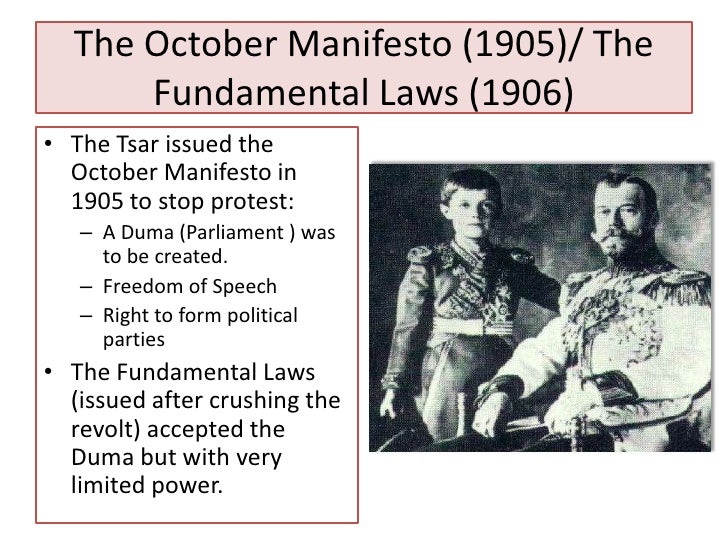
The people of Russia took this as a huge step forward and they believed that this could be the first step to creating the Russia they wanted.
However, Tsar Nicholas II had other plans, especially in regards to the Duma. The Fundamental Laws stated the following; “The Emperor was confirmed as absolute leader, with complete control of the executive, foreign policy, church, and the armed forces”.
And so began what would become many years of back and forth between the Tsar, the Duma, the Prime Ministers of the Duma and the people in regards to how the country would be run and how much power the Tsar would have.
Key People in Russian History 1906 – 1914
The following are some of the key individuals we will be focusing in class in regards to influential individuals in Russian politics and life during this time period. They helped shape the direction of Russian history.
Russia and World War I

WORLD WAR I INCREASES RUSSIA’S PROBLEMS
Alliances:
- Russia part of the Triple Entente with Britain and France since 1907.
- Russia considered ‘champion of the Slavs’ and aligned itself with Slavic groups wanting independence and the formation of a greater Slavic nation or ‘Yugoslav’
Outbreak of World War I:
- Tsar got a fantastic reaction when war announced. The Duma gave strong support, except for the Bolsheviks.
- The capital’s name was changed from St Petersburg (too Germanic) to Petrograd
- Russia had a huge military force, but it was lacking in basic equipment (guns etc) and had other major problems – poor organisation, transport inadequacies.
- Some early successes due to surprise attacks, but the better-equipped Germans soon counter-attacked in the North and annihilated the Russian armies. Other great losses followed and by Sept 1915 all territory gained in 1914 was lost. Russian land in Lithuania, Poland and Galicia was also captured.
- August 1915 Nicholas II decided to go to the Front to assist and to be seen to be playing a prominent part in the war effort.
- There were more than 2 million Russian casualties and over a million taken prisoner. As they retreated Russian generals decided on a ‘scorched earth’ policy – crops, water towers, railways and houses were destroyed. Millions of refugees had fled eastward.
- A national crisis (like a war) puts a government under great pressure…
Supportive citizens win wars by: supplying food, supplying equipments, fighting in the army
Strong effective government needs to be efficient to: supply army, meet basic needs of the people
In wartime people will make sacrifices and support a united effort to win, but they also expect government to be efficient and well organised. It is generally accepted that industry and resources will be geared to the needs of the fighting men but the people at home who are supporting them also have needs. Therefore the economy at home must produce at a higher level than normal. A government that can’t achieve this and is also losing the war and is seen to be inefficient is in trouble.
If government does not back people ‘get rid of government’
THERE NEEDED TO BE POSITIVE CHANGES BY THE TSAR TO SAVE THE MONARCHY
The Collapse of the Russian Economy
- Transport paralysed – not enough lines/trains/organisation.
- Lost land = lost production. The western areas that fell to the Germans were the most developed industrially.
- Industry runs down – shortage of labour (15million men at war), imports from overseas needed for industry blocked off, production of steel, coal, iron dropped = 593 factories closed = shortage of armaments.
- Farming production rose, but not for long.
- because more men and horses taken from farms
- fewer tools produced
- huge areas scorched by Russians or enemy
- As a result the troops got insufficient rations and civilians in cities even less. There were other problems for the people – thousands of refugees flooding from occupied areas created additional pressure on the scarce food and fuel supplies, pushed up prices and caused a housing shortage.
- Government ran most large factories under military law. Strikers arrested, exiled or sent to front.
- Firewood in short supply. Price of food up 300-500% from 1914-1916.
- Increasing criticism from all classes, including many nobles of the political influence of the Tsarina Alexandra and her friend Rasputin. There needed to be positive changes made by the Tsar if he wanted his government and monarchy to survive. As it turned out he was not the man for the job.
The Political Effects of the War
- Tsar had gone against advice by going to the Front.
- This left the government in the hands of the Tsarina Alexandra. She became known as ‘That German Woman’/’Nemka’.
- She was aided by Rasputin. Trusted him to heal Alexei and to represent the will of the people.
- Rasputin encouraged Alexandra to dismiss ministers whom she disliked and who did not like Rasputin’s influence.
- Rumours abounded about the relationship btw the Tsarina and Rasputin. Members of the nobility assassinated him in 1916.
- Tsar lost support
- Working class: resented banning of trade unions and arrest of all who agitated for improved wages or conditions of work.
- Revolutionary groups: Bolshevik members of Duma exiled to Siberia.
- Middle classes: war efforts not supported by government.
- Army – weary of conditions and poor organisation and support.
- Duma.
- President: Rodzianko
- Set up committee to deal with first aid, relief for the wounded and army supplies.
- Zemgor
- An organisation set up by zemstva and local authorities to deal with refugees, provide hospitals, food and transport.
- Widespread resentment due to economic collapse of Russia.
- Various futile plots organised to replace the Tsar with his brother the Grand Duke Michael.
Quick Recap – in video format (follow the link below)
“Video about why there was a revolution in Russia in March (or February depending on which calendar you use) 1917, what happened during the revolution and what it meant for the then leader of Russia – Tsar Nicholas II.”
https://www.youtube.com/watch?v=ymDUDGPw-p8 – The Russian Revolution March 1917 by the Ministry of History, YouTube. 28/04/2017
**UPDATE WITH FINAL PARTS OF RUSSIAN HISTORY COVERED**
The Chinese Communist Revolution
In 1900, China’s glory days were behind her. China was a nation in decline. In 1900, China was heavily controlled by foreign nations who tended to dominate the ports such as Shanghai. China was ruled by the Qing family, though the family is better known as the Manchu’s.
The Nineteenth Century has seen a marked involvement in China by European powers. Wars – the so-called “Opium Wars” – between China and Britain and France led to defeats for China. She also had to hand over to Britain the strategically important port of Hong Kong. In 1894-95, Japan attacked China. This also led to defeat and Japan took from China Korea, Formosa (Taiwan) and Port Arthur.
One consequence of these wars, was that China lost effective control of her lucrative sea ports. 50 of China’s most prosperous ports were deemed “treaty ports” which meant that they were open to foreign trade and residence. European nations also divided up China into spheres of influence and in these spheres the European nation involved all but ran it. The wishes of the Chinese were ignored. This, understandably, created a great deal of resentment amongst the Chinese.
The Manchu dynasty took the blame for this situation. Their position was unaffected by the European ‘take-over’ of China. There were rebellions against the rule of the Manchu’s. The most infamous – the Taiping Rebellion – lasted from 1850 to 1864. In this time 600 cities were ruined and as many as 20 million people were killed. Vast areas of fertile land were destroyed – land China could not afford to lose. The Manchu’s only restored their power with the help of European nations. Though this was successful, it made the Manchu’s even more hated by the Chinese people.
The Manchu family could not allow this hatred to continue. In 1898, the emperor Guangxu introduced a batch of reforms during the so-called Hundred Days of Reform. These introduced
new schools and colleges to boost the educational system in China corrupt officials were removed from courtthe financial structure of the government was reformed and modernised
However, these reforms which could have led to China becoming a more modern state, were never introduced. A rebellion at court, lead by Guangxu’s aunt, Cixi, led to him being imprisoned. Cixi was given the power to rule China in his place. She opposed these reforms and they were never introduced.
Therefore, in 1900, China remained
a nation dominated by European nations led by a highly conservative court which did not wish to see reforms as they believed they would weaken the Manchu’s power a nation where many millions detested all that the Manchu’s stood for a nation where foreigners were hated
It would only be natural to expect a movement to grow to fight against those who ruled China. This was the Yi-Ho Tuan movement – the Boxers.
China in 1900
China_s Communist Revolution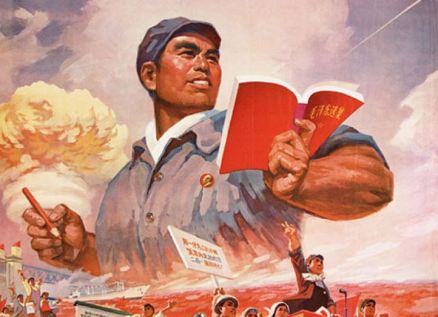
Intro to topic
Conflict Continues
Intro to the Qing Dynasty
The Cold War
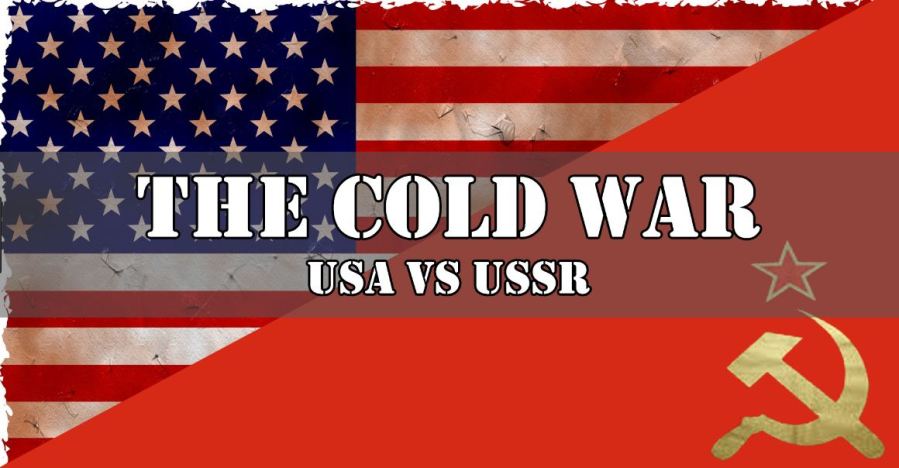
During World War II, the United States and the Soviet Union fought together as allies against the Axis powers. However, the relationship between the two nations was a tense one. Americans had long been wary of Soviet communism and concerned about Russian leader Joseph Stalin’s tyrannical, blood-thirsty rule of his own country. For their part, the Soviets resented the Americans’ decades-long refusal to treat the USSR as a legitimate part of the international community as well as their delayed entry into World War II, which resulted in the deaths of tens of millions of Russians. After the war ended, these grievances ripened into an overwhelming sense of mutual distrust and enmity. Postwar Soviet expansionism in Eastern Europe fueled many Americans’ fears of a Russian plan to control the world. Meanwhile, the USSR came to resent what they perceived as American officials’ bellicose rhetoric, arms buildup and interventionist approach to international relations. In such a hostile atmosphere, no single party was entirely to blame for the Cold War; in fact, some historians believe it was inevitable.
http://www.history.com/topics/cold-war/cold-war-history “The Cold War” 28/08/2017
The Hungarian Uprising of 1956
From Enemies to Allies USSR and WWIII
The Vietnam War
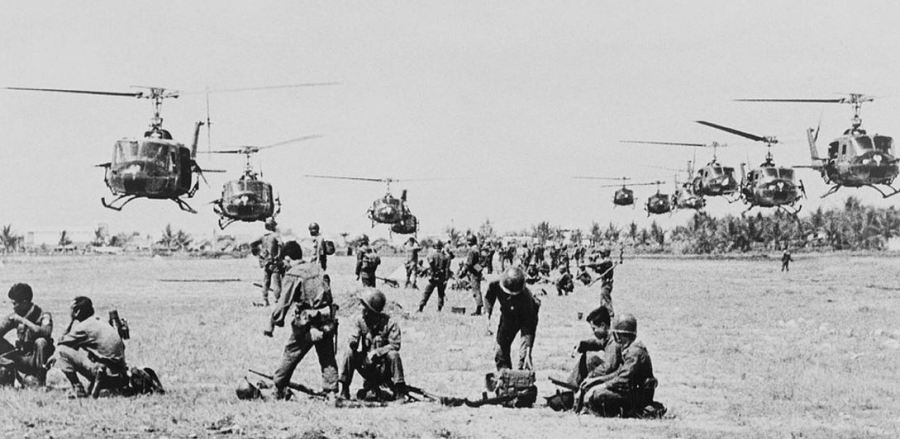
The Vietnam War was one of the longest and most expensive wars of the 20th Century. It was a war between Capitalism and Communism or Communist North and South Vietnam and Capitalist America and South Vietnam.
America became heavily involved in the war because of their fear of Communism and wanting to prevent Domino Theory.
Domino Theory was the belief that if one country fell to Communism, then it would only be a matter of time before other countries around said country would too fall to Communism.
The conflict was intensified by the ongoing Cold War between the United States and the Soviet Union.
More than 3 million people were killed, mainly Vietnamese, and billions was spent on the war. Opinions on America’s involvement in the war divided America with protests happening frequently for or against the war.
President Richard Nixon eventually ordered the withdrawal of American Troops in 1973 after huge public pressure and the realization that there was going to be no clear victory.
Communist forces ended the war by seizing control of South Vietnam in 1975, and the country was unified as the Socialist Republic of Vietnam the following year.
FRENCH COLONIALISM IN VIETNAM1.
THE 1ST INDOCHINA WAR student handout
THE DECLINE AND FALL OF DIEM 1960
STATISTICS ABOUT THE VIETNAM WAR
THE VIETNAM WAR Operation Rolling Thunder
Why was the US army unable to defeat the Viet Cong
New Zealand’s involvement in the Vietnam War was highly controversial, sparking widespread protest at home from anti-Vietnam War movements modeled on their American counterparts. This conflict was also the first in which New Zealand did not fight alongside the United Kingdom, instead following the loyalties of the ANZUS Pact.
New Zealand decided to send troops to Vietnam in 1964 because of Cold War concerns and alliance considerations. The potential adverse effect on the ANZUS alliance of not supporting the United States (and Australia) in Vietnam was key. It also upheld New Zealand’s national interests of countering communism in South-East Asia.
The government wanted to maintain solidarity with the United States, but was unsure about the likely outcome of external military intervention in Vietnam. Prime Minister Keith Holyoake decided to keep New Zealand involvement in Vietnam at the minimum level deemed necessary to meet allied expectations. New Zealand could not do much more – its meager military resources were already stretched in Malaya and conscription was out of the question.
 The Tudor Center
